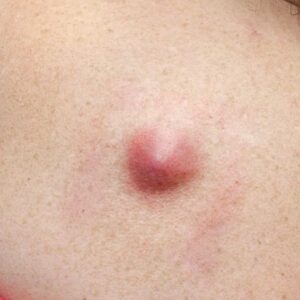
Just when you thought you’d seen everything the “gross-out” corner of the internet has to offer, a new video emerges to claim the crown. This time, the focus isn’t on a cyst or an ear, but on a nasal cavity. A viral clip is currently circulating that shows a medical professional extracting a massive, dark, and crusty mass from a patient’s nose, leaving millions of viewers wondering: How does something that big even fit in there?
This type of content has become a digital phenomenon, tapping into our deepest curiosities about the human body and the strange things that can go wrong with it.
What is a Rhinolith? Understanding the “Nose Stone”
While many viewers initially think they are looking at a giant “booger,” the reality is likely much more complex. In medical terms, a mass like this is often referred to as a Rhinolith.
A rhinolith is essentially a “nose stone.” It forms when a small foreign object—perhaps a bead, a piece of cotton, or even a blood clot—becomes lodged in the nasal passage. Over time, the body’s natural defense mechanism begins to coat the object in mineral salts, such as calcium and magnesium. Layer by layer, year after year, it grows into a hard, calcified rock.
The video captures the final moments of this years-long process, as the specialist uses surgical forceps to carefully pull the jagged, dark mass out. The sheer relief on the patient’s face—and the collective gasp of the internet—is what makes this video a viral masterpiece.
The Dangers of Nasal Blockages
It’s easy to watch these videos for the “shock factor,” but they highlight a serious medical issue. A blockage of this size doesn’t just make it hard to breathe; it can lead to a host of complications, including:
- Chronic Sinusitis: Persistent infections caused by trapped bacteria behind the blockage.
- Foul Odor (Ozaena): One of the hallmark signs of a rhinolith is a persistent, unpleasant smell that only the patient and those close to them can detect.
- Nasal Septum Damage: The constant pressure of a growing “stone” can actually erode the cartilage inside the nose.
Why Do We Keep Watching?
You might find yourself cringing, yet unable to look away. This is what psychologists call “Morbid Fascination.” Humans are biologically programmed to pay attention to “disgusting” things as a survival mechanism—it’s our brain’s way of learning what to avoid.
However, when we watch it safely behind a screen, the disgust is replaced by a massive release of dopamine once the object is removed. It’s the ultimate “tension and release” cycle. We feel a sense of “proxy relief” for the patient, imagining how incredible that first full breath of air must feel after years of being blocked.
A Warning to DIY “Extractors”
If this video has you reaching for a pair of tweezers to explore your own nose, stop immediately. The nasal passage is incredibly vascular, meaning it bleeds very easily and is located dangerously close to the brain and sensitive sinus cavities.
The specialist in the video is using sterilized medical-grade instruments and likely local anesthesia. Attempting to remove a foreign object or a deep blockage at home can push the object further back into the throat or cause a severe infection.
The Final Verdict
Whether you find it absolutely revolting or strangely therapeutic, the “Nose Stone” extraction is a powerful reminder of the human body’s ability to hide secrets in plain sight. It’s a perfect storm of medical mystery and “oddly satisfying” resolution.
What’s your take? Is this the most shocking extraction you’ve seen yet, or did the earwax video still take the lead? Let us know in the comments, and tell us which “medical mystery” we should cover next!