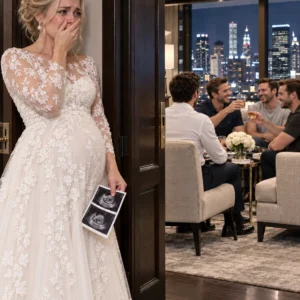
Rachel contacted Naomi Blake, a lawyer experienced in reproductive and family law. Naomi visited that afternoon, examined the document, and protected it in a sleeve: “Don’t sign anything else, and don’t send this document back to the clinic yet. We need to preserve what you were given and find out where it came from.”
When asked about the date, I recalled attending a family wedding with Peter in Portland, Maine, for which Rachel possessed photographs, my credit-card record would confirm our hotel, and the wedding program named both of us. Naomi noted each detail before asking about Dr. Alan Whitaker, who supervised fertility treatment, and instructed the clinic to preserve all material related to my treatment while barring Peter from obtaining my hospital information or making decisions about my care.
Records arrived the next day. Most seemed routine, but the embryology pages were different: three embryo identification numbers were obscured as “confidential third-party information,” my transfer was described as a gestational-carrier procedure, and an electronic consent was connected to an email address I’d never owned.
“That isn’t my account.”
Naomi zoomed in. The profile originated on a device assigned to Peter’s office.
INVESTIGATING THE CLINIC
Clinic compliance director Martin Cole arrived with the coordinator. When Naomi demanded preservation of earlier versions, he acknowledged some old lab entries had been removed from the active record, though one explicitly stated the embryos came from my eggs and Peter’s sperm. The newer documents contradicted it, assigning three family-linked letters and identifying them as third-party material.
“Who changed those labels?” Naomi demanded.
Martin said an investigation was underway, but couldn’t explain why the original note was removed. The coordinator, Mara, appeared distressed, saying Dr. Whitaker claimed the documentation was handled privately between the “intended parents” and she had allowed the procedure to continue despite questioning it on transfer day.
Naomi discovered another impossible date in an agreement involving Audrey Miller’s relatives. Audrey had died years before the contract was supposedly signed, yet Peter had told her parents, Ellen and George, that Audrey’s preserved eggs had produced an embryo and I’d volunteered to carry their grandchild. Ellen and George joined Naomi on video that night, struggling to speak as they shared all of Peter’s paperwork, including a laboratory notification confirming Audrey’s preserved material had never been used. Peter had exploited not only my desire to become a mother but also their longing to remember Audrey.
LEGAL BATTLE AND PREMATURE LABOR
The clinic also identified three more embryos made from my eggs and Peter’s sperm, though records marked them discarded and inventory couldn’t establish their destruction. That night, contractions intensified and quickened, and doctors monitored me while warning premature babies might require intensive care.
Peter’s lawyer meanwhile petitioned the court urgently, alleging I’d agreed to carry children for three different families and portraying me as confused and emotionally unstable while omitting original laboratory evidence.
Another woman, Harper, soon called Naomi, explaining Peter had assured her one transferred embryo contained her genetic material and she’d receive a baby after delivery, collecting money from her for purported legal and administrative costs.
A stronger contraction interrupted everything, and doctors said labor was advancing so an emergency birth might be safest. They offered a medical consent in case the babies’ conditions changed, and because it concerned only my care and their delivery, I signed knowingly.
Peter’s lawyer arrived with proposed temporary custody terms before the birth, but Naomi blocked his entry, and hospital security removed him. Obstetrician Dr. Ortiz returned to announce they were delivering the babies now, and terrified yet understanding the choice being offered, I agreed.