The air was thick with the scent of damp clay and the silence of a billion tons of ancient rock. For John Edward Jones, a 26-year-old medical student and seasoned explorer, the narrow aperture in Utah’s Nutty Putty Cave wasn’t a warning—it was an invitation. On that fateful night in November 2009, John exhaled, flattened his chest, and pushed forward into a passage he believed was the infamous “Birth Canal.”
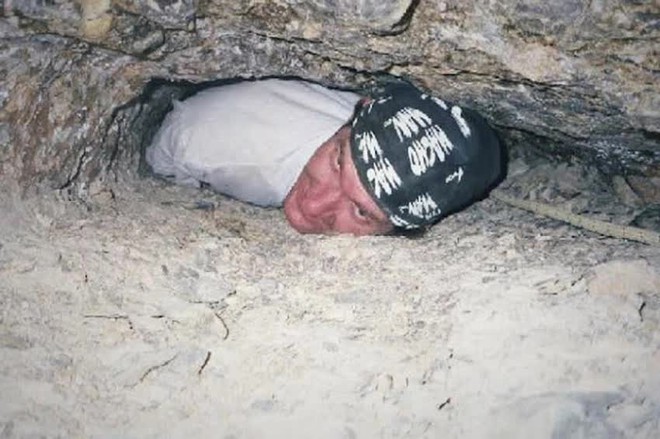
He didn’t know that he had turned into an unmapped, vertical fissure that led nowhere. As he slid downward, gravity became his captor. The rock pressed against his chest, making every breath a battle. He was 150 feet underground, wedged upside down in a space no wider than a laundry machine opening. It was the beginning of a 27-hour struggle that would captivate the world and change the landscape of cave exploration forever.

The Call of the Deep: Why We Explore
The story of John Jones is more than a tragedy; it is a reflection of the innate human desire to seek the unknown. From a scientific and psychological perspective, the allure of caving—or spelunking—is multifaceted.
1. The Mythological Threshold
Culturally, caves have always represented the “underworld” or a place of spiritual transition. In Greek mythology, they were entrances to Hades; for the Maya, they were the terrifying realm of Xibalba. To enter a cave is to leave the familiar world of light and step into a primordial silence. For John, who grew up exploring caves with his father, these spaces were not symbols of death, but of family legacy and the thrill of discovery.
2. The Science of the “Squeeze”
What makes a “squeeze” so attractive to adventurers? It is the ultimate physical and mental puzzle. Navigating a tight passage requires:
- Spatial Intelligence: Calculating how to rotate the shoulders and hips to fit through irregular gaps.
- Emotional Regulation: Suppressing the “fight or flight” response triggered by the amygdala when the body senses confinement.
The Biological Reality of Being Trapped
When John became stuck, his body entered a state of physiological crisis that few humans ever experience. Science explains why his position—upside down at a 70-degree angle—was particularly lethal.
The Physics of Respiration
In a normal environment, your diaphragm moves down to expand your lungs. In the tight crevice of Nutty Putty, the rock walls prevented John’s chest from expanding fully. Because he was upside down, his internal organs pressed against his lungs, further restricting his ability to oxygenate his blood. This led to Hypercapnia (CO2 buildup), which induces intense panic and disorientation.
Cardiovascular Failure
The human heart is designed to pump blood against gravity toward the brain. When a person is suspended upside down for a prolonged period, blood pools in the head and lungs. This leads to pulmonary edema (fluid in the lungs) and puts an immense strain on the heart, eventually leading to cardiac arrest. This was the primary challenge for the 137 rescuers who worked tirelessly to pull him free.
The Rescue Effort: A Battle Against Geometry
The rescue of John Jones remains one of the most complex operations in history. Rescuers, including Susie Motola, the first to reach him, faced a environment that defied standard procedures.
- The Pulley System: Rescuers installed a series of 15 pulleys to hoist John out. They managed to lift him a few feet, but the “angles of the cave” were too sharp. In a heartbreaking moment, a pulley anchor failed, and John slid back into the crevice, deeper than before.
- The Physical Toll: To even attempt to pull him through the narrowest bends, rescuers realized they might have to break his legs—a grim necessity John reportedly agreed to in his desperate wish to see his wife, Emily, and their children again.
“I really, really want to get out,” John told his rescuers. His resilience during the 28-hour ordeal, even singing songs to keep spirits high, remains a testament to human endurance under impossible pressure.
Legacy of the Nutty Putty Cave
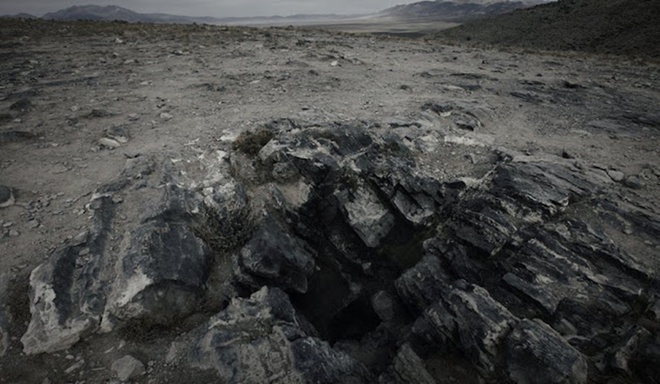
Following John’s passing, a difficult decision was made. Because his body could not be safely recovered, the cave was sealed with concrete, turning it into a permanent tomb and a memorial. Today, it is known to many as “John Jones Cave.”
Lessons for Modern Explorers
The tragedy served as a global wake-up call regarding cave safety:
- Preparation vs. Physical Change: John had not caved in years and had gained weight since his youth. His “muscle memory” of the cave no longer matched his physical reality.
- The Danger of the Unknown: Even experienced cavers can mistake a “dead-end” fissure for a known passage.
- The Respect for Nature: It reinforces the scientific truth that natural environments are indifferent to human life. We must approach them with extreme humility.
Conclusion: Finding Meaning in the Dark
The story of John Edward Jones is a haunting reminder of the risks we take when we push the boundaries of our world. Yet, it also highlights the extraordinary empathy of the human spirit—the 137 rescuers who risked their own lives in the cramped dark to save a stranger.
While the “Birth Canal” of Nutty Putty Cave is forever closed, the story of the man trapped between earth and breath continues to resonate. It teaches us that while curiosity is the engine of human progress, it must be tempered by a profound respect for the unforgiving laws of the natural world.
Safety Tips for Cave Exploration
- Never cave alone: Always have a team and a surface contact.
- Know your limits: Physical fitness and size are critical factors in tight spaces.
- Use proper gear: High-quality lighting and helmets are non-negotiable.
- Study the maps: Always carry a physical map of the cave system and stay on marked paths.