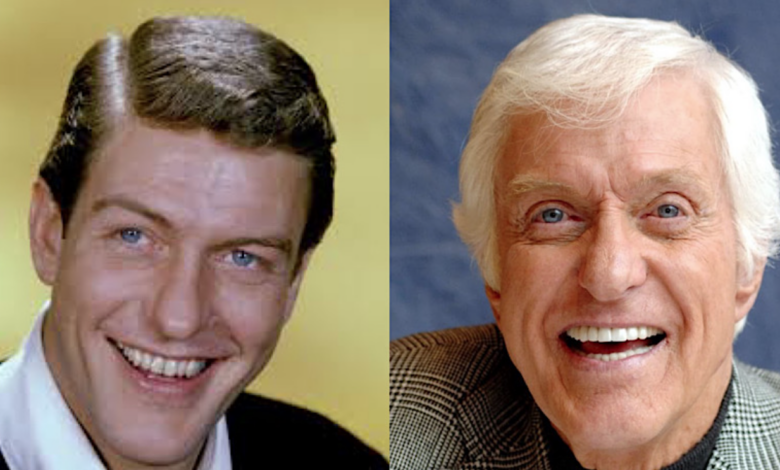
Dick Van Dyke’s Timeless Performances Still Bring Generations of Families Together
A Familiar Face Connected to Decades of Family Memories
For generations of Americans, seeing Dick Van Dyke on a television screen creates an immediate sense of familiarity.
His face can bring back memories of a television playing in the family living room, parents laughing together on the couch, and children gathering nearby for an evening of shared entertainment.
Through The Dick Van Dyke Show, Mary Poppins, and Chitty Chitty Bang Bang, Van Dyke became part of the entertainment that one generation introduced to the next.
Children who originally watched him dance, stumble, and joke eventually grew up and shared those same performances with their own children and grandchildren.
His career connects the intimate world of television comedy with the colorful spectacle of Hollywood musicals. In both settings, Van Dyke possessed a rare ability to make audiences feel welcome.
His characters entered extraordinary situations, but the warmth behind his performances made them seem approachable. Viewers were invited to laugh with him rather than simply watch from a distance.
Rob Petrie Became Part of the American Living Room
On The Dick Van Dyke Show, Van Dyke played comedy writer Rob Petrie, a husband and father attempting to balance his home life with the unpredictable demands of television production.
The series originally aired from 1961 to 1966, but its influence extended far beyond those five years.
Alongside Mary Tyler Moore, who played Laura Petrie, Van Dyke helped transform the fictional Petrie household into a place audiences felt they knew.
The show found humor in ordinary misunderstandings, professional frustrations, family disagreements, and the small embarrassments of everyday life. Rob Petrie did not need to be flawless to remain likable.
He stumbled over furniture, became carried away by his ideas, and regularly found himself trapped inside problems partly of his own creation.
Van Dyke’s physical comedy made those situations memorable, but the appeal went beyond movement. His timing, facial expressions, and ability to communicate embarrassment helped audiences recognize something of themselves in Rob.
The character could make a mistake without becoming cruel. He could look foolish without losing his dignity. By the end of an episode, laughter usually offered a path back toward understanding.

The Power of Being Willing to Look Foolish
Part of Van Dyke’s lasting charm comes from his willingness to surrender completely to a comic moment.
Some performers protect themselves from looking ridiculous. Van Dyke understood that appearing foolish could make a character more human.
His comedy often depended on confidence collapsing at exactly the wrong moment. A simple misunderstanding could grow into elaborate confusion, while an attempt to maintain control made the situation even funnier.
Audiences recognized the feeling beneath the joke. Nearly everyone has said the wrong thing, misread a situation, or tried to recover from an embarrassing mistake.
Van Dyke turned those experiences into something viewers could share. The laughter did not deny the embarrassment; it made the embarrassment easier to bear.
That quality helped his television work remain accessible long after the fashions, furniture, and workplace routines surrounding Rob Petrie had changed.
The details belonged to a particular era, but the emotions did not.
Mary Poppins Turned London Rooftops Into a Stage
Van Dyke displayed another side of his talent in Mary Poppins.
The film combined fantasy, music, family emotion, and elaborate visual sequences. Van Dyke’s energetic performance helped connect those different elements.
A London rooftop became a stage where chimney sweeps could dance. Ordinary streets opened into worlds of imagination, and everyday life could suddenly become musical.
Van Dyke approached that fantasy with complete commitment. His movement carried the exuberance of a stage performer, while his warmth prevented the spectacle from becoming emotionally distant.
For children, the film offered color, music, and impossible adventures. For adults, it contained reflections on family, responsibility, and the danger of becoming too consumed by work to recognize what truly matters.
Van Dyke’s presence helped bridge those experiences. Children could enjoy the dancing while adults noticed the tenderness and regret beneath the story.
That ability to operate on several emotional levels is one reason the film continues to be passed from one generation to another.
Adventure and Imagination in Chitty Chitty Bang Bang
In Chitty Chitty Bang Bang, Van Dyke played an inventive father whose creations opened the door to a fantastical adventure.
The story transformed a remarkable automobile into a symbol of possibility. With imagination, an ordinary family could travel beyond the limits of daily life.
Van Dyke once again combined physical comedy, music, and emotional warmth. His character could be eccentric and playful while remaining recognizable as a devoted parent.
For young viewers, the inventions and adventures offered escape. For parents watching beside them, the emotional center came from a father attempting to create joy and safety for his children.
Van Dyke made that combination believable. His performance suggested that silliness and responsibility did not have to exist separately.
A loving parent could be imaginative. An adult could embrace wonder without abandoning maturity. A family could face uncertainty while still finding reasons to sing and laugh.
The Same Performance Changes as the Viewer Grows Older
Revisiting Van Dyke’s work years later can be a surprisingly emotional experience.
A child may initially notice the dancing, exaggerated expressions, and extraordinary adventures. An adult may become more interested in the relationships between the characters or the precision of the comedy.
The performance remains the same, but the viewer has changed.
Scenes that once seemed purely funny may later reveal tenderness. Moments that children overlooked can acquire new meaning after they become parents themselves.
An adult returning to Mary Poppins may understand the pressures affecting the Banks family differently. Someone rewatching The Dick Van Dyke Show may recognize the difficult balance between work, marriage, and parenthood.
The entertainment gains additional layers because viewers bring their own experiences back to it.
That is one mark of work with lasting value: it does not become smaller as the audience grows older. It continues offering something new.
A Rerun Can Become a Reunion With the Past
For older viewers, familiar scenes may recall people as clearly as they recall storylines.
A theme song can bring back the sound of a parent laughing. A dance sequence can revive the memory of children sitting too close to the television and being told to move backward.
A favorite episode may remind someone of a grandparent who never missed the program. A musical number can return an adult to the house where they first watched it decades earlier.
In those moments, a rerun becomes more than repeated entertainment. It becomes a small reunion with an earlier chapter of life.
The people connected to those memories may no longer be present, and the rooms may have changed or disappeared. Yet the performance preserves a path back to them.
When the familiar comedy begins, the distance between past and present briefly becomes smaller.
The Intimacy of a Familiar Voice
There is something uniquely powerful about a performer whose voice has remained familiar for decades.
Hearing Van Dyke speak or sing can restore details that seemed forgotten: the room where a film was first watched, the person who introduced it, or the anticipation of a beloved scene.
Those memories do not belong to the performer. They belong to individual viewers and families. Yet his work provides the place where the memories have gathered.
That is one of the quieter achievements of a long career in entertainment.
A performer can become part of millions of ordinary lives without meeting the people who remember him. His work may lighten a difficult evening, create a family joke repeated for years, or become the movie someone insists every new generation must see.
The relationship exists at a distance, but its emotional effects can be deeply personal.
Entertainment Designed for Families to Share
Van Dyke’s most famous projects arrived during an era when families often watched television together.
With fewer screens and viewing choices, one program could become a shared household event. Children and adults watched the same performance and found different reasons to enjoy it.
Modern entertainment habits have changed, but Van Dyke’s work still encourages that kind of shared experience.
A grandparent may introduce The Dick Van Dyke Show to a younger relative. A parent may play Mary Poppins because it was important during their childhood. A family may discover Chitty Chitty Bang Bang together without any previous connection to it.
The older viewer brings memory. The younger viewer brings discovery.
If they laugh at the same moment, the performance connects them despite the years between their childhoods.
Warmth Beneath the Spectacle
Van Dyke’s work included elaborate choreography, fantasy settings, inventive props, and precisely constructed comedy. Beneath all that spectacle was an unmistakable warmth.
He rarely seemed distant from the audience. Even during the most theatrical scenes, his performances maintained a sense of openness.
That warmth helped extraordinary worlds feel safe enough to enter. Viewers could accept a magical nanny, a flying automobile, or a comedy writer caught in another ridiculous misunderstanding because Van Dyke made the experience inviting.
His characters often struggled, but they did not lose their capacity for joy. They recovered through humor, imagination, and affection for the people around them.
That emotional quality may explain why the performances remain comforting. They acknowledge that life can be confusing and embarrassing while suggesting that laughter can help people continue.
A Legacy Preserved in Family Memories
Dick Van Dyke’s legacy belongs to entertainment history, but it also exists in private family memories that will never appear in an archive.
It lives in parents humming songs while preparing dinner, siblings repeating jokes from favorite episodes, and grandparents smiling when a familiar scene begins.
It lives in the tradition of saying, “You have to see this,” before introducing a child to a film that once felt magical.
The audience continues to grow older. Children become parents, parents become grandparents, and the homes where those performances were first watched inevitably change.
Yet the work remains available, ready to create new memories beside the old ones.
A child discovering Van Dyke today does not need a lesson about television history or Hollywood musicals. The performance only needs to contain a moment funny enough to make that child laugh.
Beside them may be someone who remembers laughing at exactly the same moment many years earlier.
That shared laughter is part of Van Dyke’s enduring achievement. His performances did not merely entertain generations separately. They gave those generations something joyful to experience together.