As tensions rise following weekend airstrikes on Iran by the United States and Israel, a familiar and unsettling question has resurfaced among Americans: if global conflict were to spiral into a nuclear World War III, where—if anywhere—would be safest?
It’s a question that echoes Cold War anxieties, when schoolchildren practiced “duck and cover” drills in preparation for a potential Soviet strike. At the time, hiding beneath desks offered psychological comfort more than meaningful protection. Today, while the geopolitical players have changed, the underlying fear feels eerily familiar.
Nuclear Claims and Escalation Fears
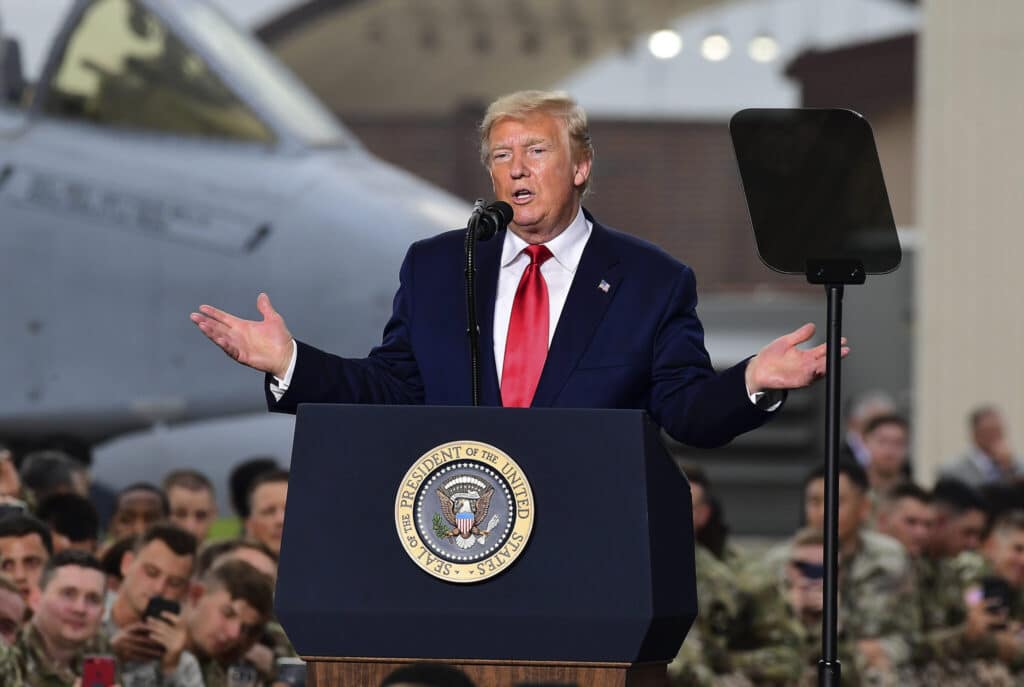
President Donald Trump and members of his administration have claimed that Iran restarted its nuclear program, possesses sufficient fissile material to construct a bomb quickly, and is developing long-range missile capabilities.
However, according to reporting by The New York Times, these assertions remain either unproven or disputed. Despite that, the joint U.S.–Israeli campaign—reportedly titled “Operation Epic Fury”—struck multiple Iranian cities, including Tehran, Isfahan, Tabriz, Kermanshah, and Qom. Some reports have alleged that Supreme Leader Ayatollah Ali Khamenei was killed in the attacks, though independent verification remains limited.
While the White House has warned Tehran against retaliation, defense analysts caution that any Iranian counterstrike could target U.S. nuclear infrastructure—potentially escalating the conflict into something far more catastrophic.
America’s Nuclear Geography
The United States maintains approximately 2,000 nuclear warheads, with the majority concentrated in missile silo fields located in:
- Montana
- North Dakota
- Nebraska
Smaller stockpiles exist in Wyoming and Colorado.
These locations are widely known within defense circles and would likely be primary targets in a full-scale nuclear exchange. According to data cited by Nuclear Forces and related analyses, radiation exposure levels in states housing missile silos—such as Montana, Wyoming, Colorado, Nebraska, South Dakota, North Dakota, Iowa, and Minnesota—could range from 1 gray (Gy) to as high as 84 Gy following a direct strike. For reference, around 8 Gy is considered lethal to humans.
Because of this, some analysts argue that areas farther from nuclear installations may offer relatively better short-term survival odds.
States Considered Lower Risk
An analysis referenced by Newsweek evaluated potential cumulative radiation exposure after four days, based on geographic coordinates and modeling of fallout patterns. States considered comparatively lower risk included:
- Maine
- New Hampshire
- Vermont
- Massachusetts
- Rhode Island
- Connecticut
- New York
- New Jersey
- Pennsylvania
- Delaware
- Maryland
- Virginia
- West Virginia
- North Carolina
- South Carolina
- Georgia
- Florida
- Alabama
- Mississippi
- Tennessee
- Kentucky
- Ohio
- Indiana
- Michigan
Additional areas noted as relatively less exposed included Washington, Utah, New Mexico, and Illinois.
Still, experts caution that “lower risk” does not mean safe. In a nationwide nuclear exchange, fallout patterns would depend on wind currents, strike scale, and the number of detonations.
Long-Term Survival: A Different Calculation
Short-term survival is only one part of the equation. Long-term sustainability presents an even more complex challenge.
Scientific American previously warned that concentrated strikes on U.S. silo fields in states like Colorado, Wyoming, Nebraska, Montana, and North Dakota would devastate surrounding regions and contaminate agricultural land for years.
Even more concerning is the potential for a nuclear winter—a scenario in which soot and debris from widespread detonations block sunlight, dramatically lowering global temperatures and collapsing agriculture.
Investigative journalist Annie Jacobsen, speaking on The Diary of a CEO podcast, argued that countries in the Southern Hemisphere would have better odds of sustaining life in such a scenario.
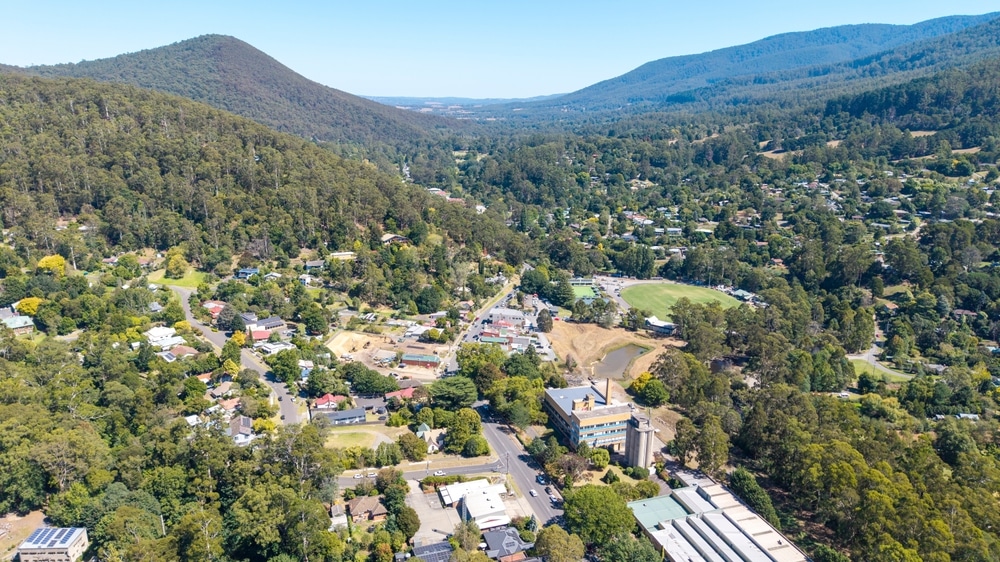
According to Jacobsen, New Zealand and Australia may be among the few regions capable of maintaining agricultural production during prolonged atmospheric cooling.
“Places like Iowa and Ukraine would just be snow for 10 years,” she explained. “So agriculture would fail, and when agriculture fails, people just die.”
She further noted that ozone layer damage and radiation exposure could make sunlight hazardous in many regions, forcing survivors underground and triggering global food shortages.
The Reality Check
Despite maps and modeling, nearly every expert emphasizes one point: there is no truly “safe” place in a full-scale nuclear war.
Modern nuclear arsenals are powerful enough to reshape global climate systems. Even areas far from direct targets would face food shortages, infrastructure collapse, and long-term health risks.
The debate about geographic safety reflects something deeper—anxiety about escalation and uncertainty in global politics. While some states may statistically face lower immediate radiation exposure, and certain Southern Hemisphere countries may have better agricultural resilience, survival in such a scenario would depend on far more than geography alone.
In the end, the most sobering conclusion remains unchanged from the Cold War era: nuclear war has no real winners—only varying degrees of devastation.