The Unfolding Crisis in Nepal: A Nation on the Brink
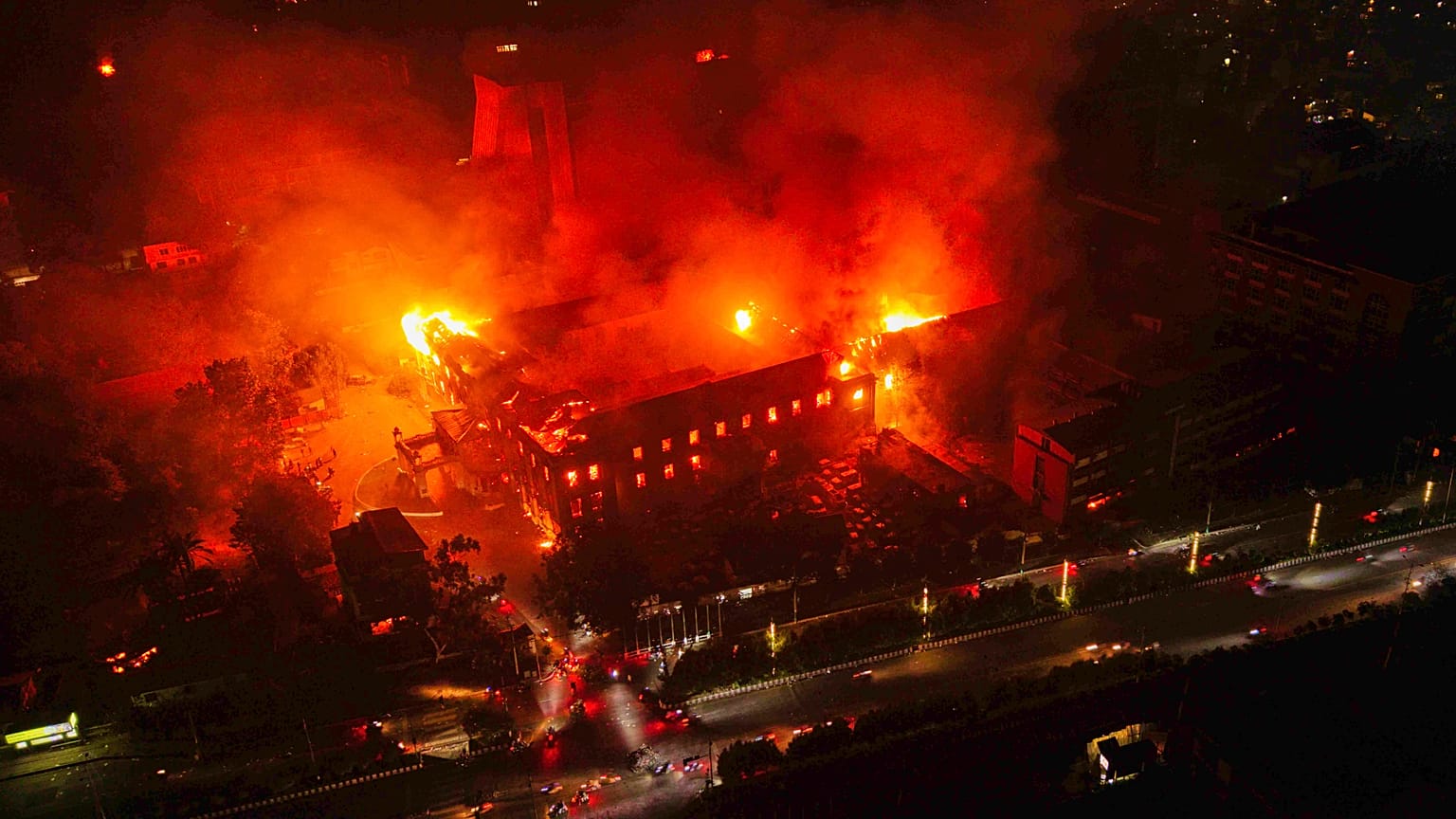
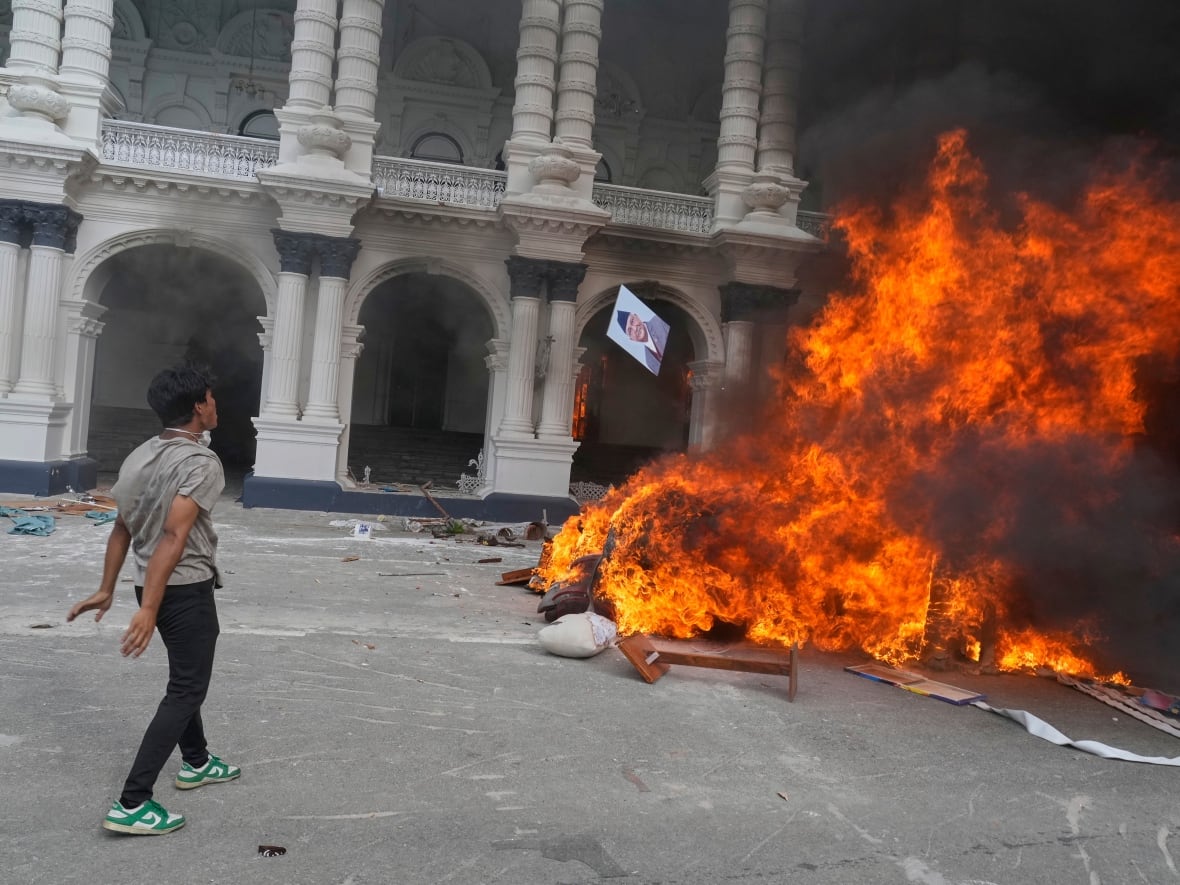
The recent scenes from Kathmandu, where empty streets became a harrowing symbol of unrest, captured the world’s attention as Nepal grappled with a significant political crisis. Soldiers patrolled the intersections, helicopters hovered overhead, and families anxiously watched from behind closed doors. In an unprecedented move, the Nepalese military imposed an indefinite curfew on the capital, a stark response to escalating protests that had engulfed the nation. Initially sparked by a government ban on popular social media platforms, these protests quickly morphed into one of the most significant public uprisings in Nepal’s modern history, as tens of thousands took to the streets demanding accountability, transparency, and systemic change.
The Trigger: A Social Media Ban
The catalyst for this unrest was a government decision to restrict access to 26 social media platforms, including major players like Facebook and Instagram. Officials claimed that these platforms had failed to comply with local registration requirements, but critics viewed this move as an attempt to stifle free speech. For the youth of Nepal, many of whom utilize these platforms for communication, work opportunities, and cultural exchange, the ban felt deeply personal and unjust. Outrage erupted, and the once dormant public space was filled with voices demanding change. By the weekend, vibrant demonstrations erupted, with students, young workers, and activists flooding city squares and taking to social media to share their grievances.
Underlying Frustrations: The Youth’s Dilemma
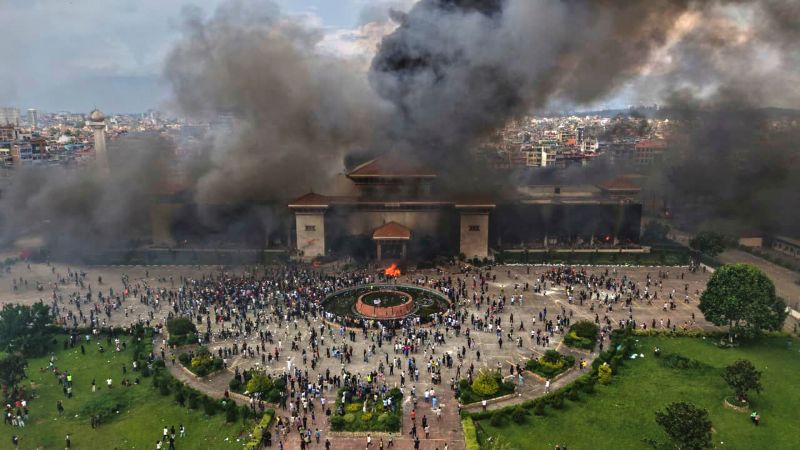
While the immediate trigger of the protests was the social media ban, the demonstrations underscored deeper, long-standing frustrations among the youth of Nepal. The nation faces persistently high unemployment rates, with nearly one in five young people jobless as of 2024, according to World Bank data. With scarce opportunities available at home, many young Nepalis have resorted to leaving the country in search of employment, primarily in the Middle East and Southeast Asia. The younger generation has become increasingly vocal against economic inequality, especially in light of the visible privileges enjoyed by the political elite’s children, often referred to as “nepo kids.” This stark contrast between affluence and hardship fueled the protests, as many young people felt abandoned by a government that had failed to secure a fair future.
Escalation and Government Response
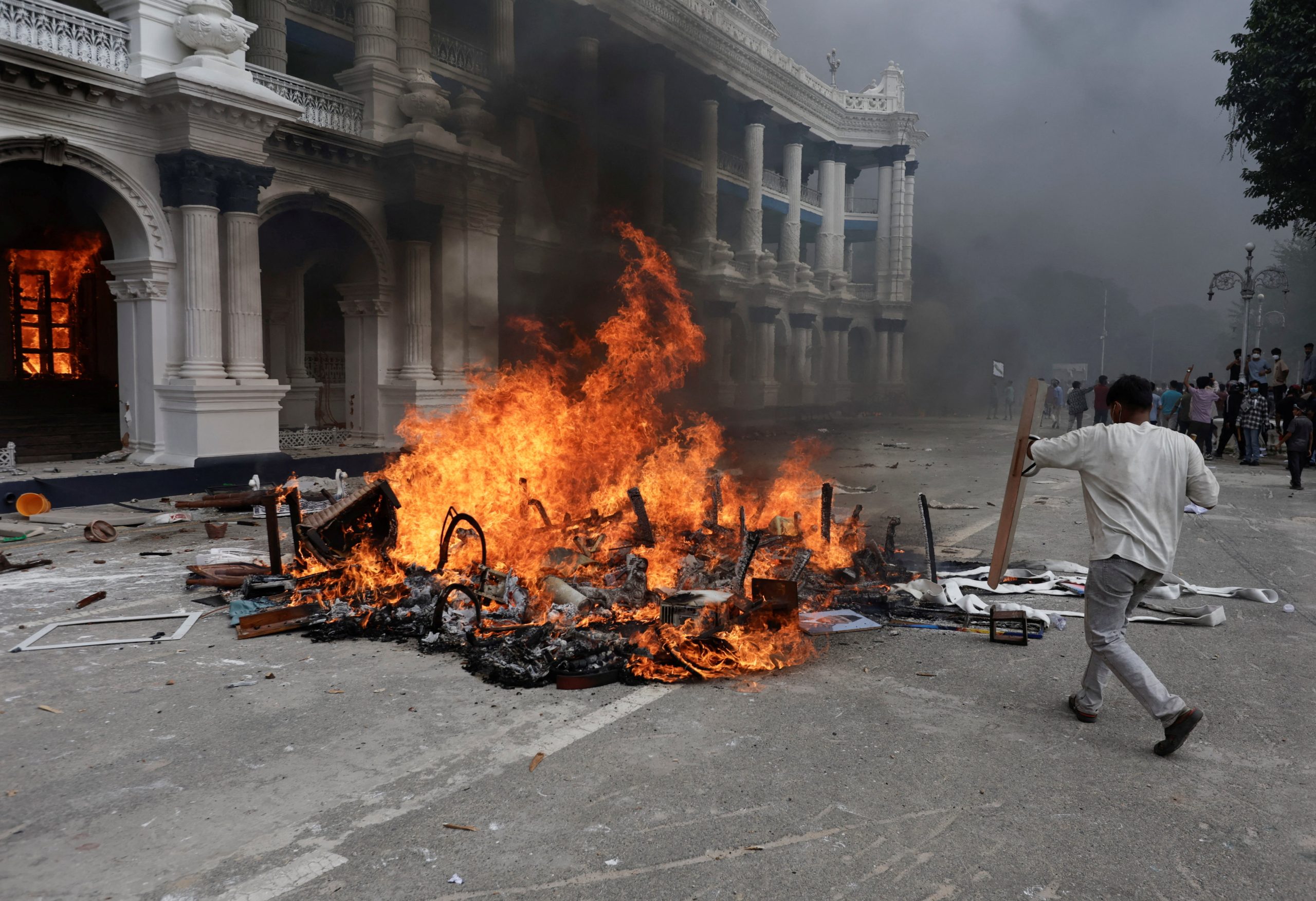
As unrest spread rapidly across the capital, the scale of the protests overwhelmed initial police efforts to maintain order. Crowds grew larger, blocking major roads and congregating around government buildings, demanding leadership changes. The government, taken aback by the intensity of the discontent, resorted to deploying military forces, an unusual step in Nepal’s history of civilian governance. The curfew imposed by the military further intensified tensions, as armed troops established checkpoints and ordered residents to stay indoors. Helicopters transported officials to secure locations, signaling the severity of the situation. Nevertheless, thousands continued to gather, voicing demands for anti-corruption measures and greater transparency from their leaders.
Political Fallout: A Leadership Crisis
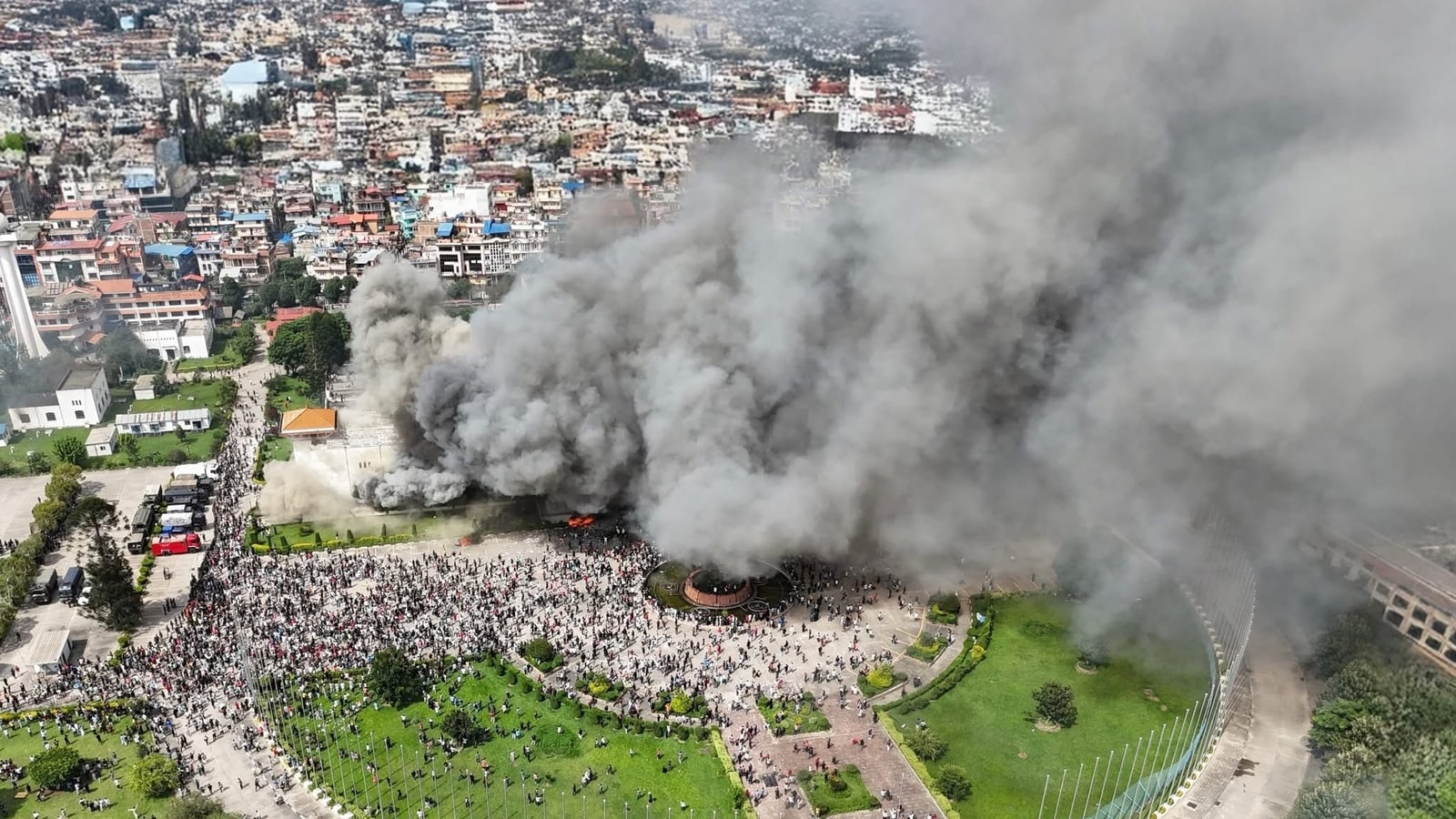
As protests escalated, the turmoil reached the highest levels of government, culminating in the resignation of Prime Minister KP Sharma Oli. Facing increasing criticism and diminishing authority, Oli stepped down, a move many viewed as insufficient to quell the protests. While President Ram Chandra Poudel accepted the resignation, the void in leadership only exacerbated the growing instability. Protesters remained in the streets, demanding substantive changes rather than merely symbolic gestures. The resignation, rather than calming the situation, fueled further unrest, as citizens called for real accountability and reform.
Broader Implications: Governance and Rights
The unrest in Nepal has exposed not only the fragility of its political landscape but also the underlying issues concerning governance and citizen rights. The government’s initial attempt to regulate social media has led to intense debates regarding censorship versus accountability. While some lawmakers argue that requiring platforms to establish local offices would enhance compliance and responsibility, opponents assert that this represents a dangerous precedent for restricting free speech. Rights organizations have raised alarms about potential violations of civil liberties, emphasizing that any suppression of dissent could have lasting implications for democracy in Nepal.
Looking Ahead: The Path Forward
Nepal stands at a critical juncture, with the way forward uncertain. The resignation of the prime minister has created a leadership vacuum, yet no clear successor has emerged. Amid ongoing protests, President Poudel has called for calm and dialogue, but bridging the gap between disillusioned youth and a beleaguered political elite will require more than simply words. Key demands include comprehensive anti-corruption reforms, increased job opportunities, and the protection of free speech. Analysts warn that unless these pressing issues are addressed, the unrest may continue, perpetuating a cycle of frustration and discontent.
A National Reckoning: The Role of Digital Activism
The events unfolding in Nepal serve as a stark reminder of the transformative power of digital platforms in modern society. For many young citizens, access to social media is not merely about communication; it is intrinsically linked to their identity, community, and empowerment. Restricting these platforms has far-reaching implications, as it can feel like an assault on personal freedoms. At the same time, the protests reflect deep-rooted structural challenges—economic disparity, high unemployment, and perceptions of corruption—that extend beyond the digital realm. Addressing these complexities will necessitate a commitment from leaders to engage meaningfully with the very citizens who are now demanding a seat at the table.
Conclusion: A Defining Moment for Nepal
As Kathmandu remains under curfew, the nation finds itself at a pivotal crossroads. What began as a government initiative to regulate social media has escalated into a broader dialogue about representation, fairness, and the aspirations of a new, empowered generation. Whether Nepal’s leaders choose to embrace reform and open dialogue, or resort to further restrictions, will significantly shape the country’s trajectory in the years to come. For now, the striking images of empty streets, guarded by military personnel, serve as a potent reminder of the delicate balance between authority and the voice of the people. As this national reckoning unfolds, it has the potential to redefine the political landscape of Nepal for generations ahead.