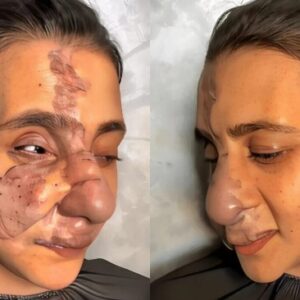
Tilapia Skin: How a Simple Fish Is Transforming Modern Burn Treatment
Medical breakthroughs don’t always come from high-tech laboratories or million-dollar equipment. Sometimes, life-saving innovations are born from the most unexpected sources — from nature itself, from the everyday things we often overlook. One of the most astonishing examples of this is the use of tilapia skin in treating burn injuries — a discovery that has captivated the medical world for its effectiveness, affordability, and remarkable healing results.
A Natural Alternative to Conventional Treatments
For decades, treating burns has relied on expensive creams, skin grafts, and synthetic materials designed to protect damaged tissue and prevent infection. But in Brazil, a group of researchers stumbled upon a natural alternative that was not only cheaper but also surprisingly efficient — the skin of the tilapia fish.
This species, one of the most widely consumed in Latin America, produces tons of discarded fish skin every year. What used to be considered waste turned out to have extraordinary healing potential, capable of revolutionizing how medicine approaches wound care.
(A related video about this discovery can be found at the end of this article.)
From Discovery to Medical Revolution
It all began in northeastern Brazil, where a team of scientists sought a low-cost treatment for burn patients in overcrowded public hospitals. They discovered that tilapia skin was rich in collagen types I and III — proteins vital for human tissue regeneration. Even more fascinating, its texture was firm, elastic, and biologically similar to human skin, making it a perfect temporary graft.
In the laboratory, the results were astonishing. Tilapia skin not only adhered well to wounds but also created a moist, protective barrier that accelerated healing, reduced pain, and minimized infection. It became, quite literally, a “second skin.”
Patients who received this treatment described an almost immediate sense of relief. Clinical studies confirmed that their wounds healed faster than those treated with traditional methods — and with fewer scars.
How the Process Works
Before being applied, the fish skin undergoes an extensive sterilization and preservation process. It is meticulously cleaned, disinfected, and treated with glycerol to ensure it remains viable for medical use. In hospitals, doctors place the skin directly over burn wounds and often leave it in place for several days, eliminating the need for constant dressing changes — a relief for both patients and medical staff.
The benefits are numerous: faster recovery, reduced scarring, lower risk of infection, and dramatically lower costs. What’s more, it transforms an abundant and inexpensive byproduct into a resource that can save lives — a rare combination of sustainability and compassion in modern medicine.
Healing the Body — and the Spirit
Beyond its scientific importance, this innovation carries a deeply human message. Imagine being a burn survivor facing months of painful recovery, only to learn that a simple, natural treatment can ease your suffering and restore your hope. Many patients treated with tilapia skin have described the experience as “a second chance at life,” not only because of their physical recovery but because of the renewed sense of dignity and optimism it brings.
Beyond Burns: A Future Full of Possibilities
Encouraged by the success of their discovery, the research team has continued to explore new uses for tilapia skin — from diabetic ulcers to post-surgical wounds. Early trials have produced promising results, suggesting that this technique could eventually play a major role in regenerative medicine worldwide.
To ensure patient safety, scientists have tested for possible immune reactions, and so far, the results are overwhelmingly positive. Tilapia skin is biocompatible, meaning the human body readily accepts it. Even when removed, it causes minimal pain or trauma, which makes the recovery process far more humane.
Global Interest and Widespread Impact
As news of this medical breakthrough spread, hospitals and universities across Latin America, Africa, and Asia began exploring how to implement the technique in their own countries. The appeal is obvious: it’s affordable, sustainable, and easy to produce. What began as a local experiment has become an international model for accessible healthcare innovation.
However, behind this “simple” idea lies years of rigorous research, clinical trials, and ethical oversight. Nothing about this process was improvised. Each stage was carefully tested to guarantee safety and effectiveness. The result? Thousands of patients who have regained not just their health, but also their confidence and quality of life.
A Lesson in Sustainable Medicine
Experts believe that solutions like this represent the future of healthcare — one that is more sustainable, inclusive, and respectful of nature. Instead of relying solely on synthetic materials or costly procedures, medicine can draw from natural resources to create affordable, effective treatments. Tilapia skin has become a shining example of this approach: a natural material transformed into a high-impact medical tool.
From Waste to Wonder
Perhaps the most moving part of this story is its symbolism. What was once thrown away as worthless has become a means of healing — proof that in both science and life, value often hides where we least expect it. Tilapia skin reminds us that even the simplest things, when studied with curiosity and compassion, can change lives.
Conclusion
Tilapia skin is far more than a medical curiosity — it is a quiet revolution in the treatment of burns. It represents a blend of nature’s wisdom and human ingenuity, offering a path toward medicine that is not only effective but also ethical and sustainable.
And while the world continues to explore its potential, one truth remains clear: sometimes, the smallest creatures — and the simplest ideas — can spark the greatest transformations.