A Flight to Remember: The Courageous Response on Alaska Airlines Flight 2221
The skies are often seen as a realm of routine and tranquility, where travelers embark on their journeys with little more than a few announcements and the gentle hum of aircraft engines to occupy their minds. However, Alaska Airlines Flight 2221 from Oakland to Portland transformed an otherwise ordinary flight into a profound demonstration of human resilience and teamwork. What began as a typical domestic trip soon escalated into a significant test of courage, quick thinking, and collective action at 30,000 feet, proving that the most unexpected situations can reveal the best in people.
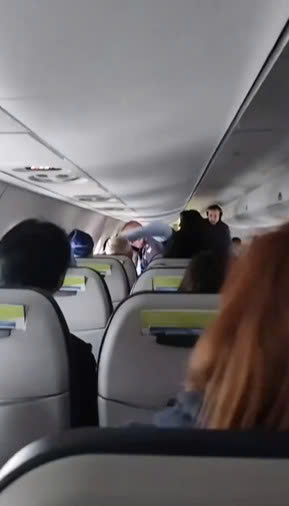
Shortly after the aircraft reached cruising altitude, a male passenger began exhibiting troubling signs of distress. Initially presenting with erratic behavior, the situation rapidly deteriorated into a full-blown psychotic episode. He exhibited aggressive tendencies that sent waves of fear and anxiety through the cabin. The confined space of the aircraft heightened the sense of panic, leaving passengers and crew alike in a vulnerable position where their only option was to rely on one another. This sudden shift from calm to chaos created an atmosphere of tension, as passengers grappled with the reality of the crisis unfolding around them.
Amidst the turmoil, the professionalism and training of the Alaska Airlines crew became the linchpin of the situation. Flight attendants, adeptly trained to handle a myriad of emergencies, swiftly assessed the threats posed by the distressed passenger. Their calm determination was palpable as they recognized that traditional methods of de-escalation were unlikely to succeed. Collaborating with alert passengers who were equally concerned, the crew devised an impromptu plan to restrain the individual. Lacking specialized equipment, they ingeniously utilized seatbelt extenders as makeshift restraints, showcasing their ability to adapt to circumstances when the stakes were incredibly high.
As the situation unfolded, passengers were not merely bystanders; they became active participants in a collective effort to restore order. Some passengers stepped in to help hold the agitated individual steady, while others made space for the crew to maneuver effectively. In a remarkable display of unity, strangers became allies, demonstrating that in times of crisis, the human spirit can rise to meet the challenge. This episode exemplified how fear can be counteracted by a strong sense of cooperation, transforming potential chaos into a controlled and manageable situation.
Thanks to the swift and decisive actions taken by the crew and passengers, the man was successfully subdued without any severe injuries to himself or others on board. Crew members remained vigilant for the rest of the flight, working diligently to ensure that calm was restored and that passengers could continue their journey with minimal disruption. By the time the aircraft touched down in Portland, local authorities were prepared to take custody of the individual, facilitating a necessary mental health evaluation to ensure he received the care he needed. Notably, this incident concluded without physical harm to anyone aboard, a testament to the effective measures implemented by both the airline staff and the passengers who acted in solidarity.
The incident on Flight 2221 serves as a poignant reminder of several crucial lessons. First, it highlights the invaluable role of flight attendants, whose responsibilities extend far beyond the mundane tasks of serving beverages and assisting with luggage. Their primary duty centers on safety, and their training equips them to manage emergencies ranging from medical crises to security threats. The successful handling of this incident illustrates that the true measure of their effectiveness lies in their ability to maintain composure and act decisively when faced with unforeseen challenges.
Moreover, this event brings to light the significance of passenger cooperation in ensuring safety during flights. While many travelers board aircraft focused solely on their own journeys, moments of crisis underscore the importance of shared experience in air travel. Passengers who willingly follow instructions and provide support when necessary can indeed alter the course of events dramatically. This incident showcased how ordinary individuals can become extraordinary heroes in the face of adversity, reinforcing that vigilance and collaboration are essential components of in-flight safety.
In a broader context, the event on Flight 2221 sparks an important dialogue about mental health issues arising during air travel. With airlines increasingly encountering situations where passengers experience mental health crises in the air, far removed from the support systems available on land, the need for compassion becomes paramount. Unlike tangible mechanical failures or weather-related disruptions, crises involving mental health are inherently unpredictable and require a nuanced approach. This highlights the need for ongoing training and preparedness, ensuring that airline crews are equipped not just with technical skills but also with empathetic responses toward individuals in distress.
As the dust settled and passengers reflected on the day’s events, what could have been a harrowing tale of midair disaster instead emerged as a testament to human resilience. The incident on Alaska Airlines Flight 2221 became a powerful narrative of how preparedness, teamwork, and compassion can mitigate crises. It demonstrated that safety in the skies is not merely a function of technology or engineering, but fundamentally relies on human presence and training. The calm, decisive actions of the crew, coupled with the cooperation of vigilant passengers, transformed a potentially tragic scenario into a manageable event.
Ultimately, the story of Flight 2221 resonates beyond just this singular incident; it underscores the enduring truth that courage and kindness can triumph over fear, even in the most unexpected circumstances. It is a reminder that in the face of adversity, there exists a profound strength in unity and the collective will to ensure safety and support for one another. As travelers continue to navigate the challenges of air travel, the lessons from this flight will remain an invaluable part of the discourse on emergency preparedness and the compassionate response that should accompany the complexities of modern air travel.